

In Half
- Animation, Experimental, Fantasy, Short Films, ZFF 2026 lineup
- 2024
-
Running Time 24 minutes 30 seconds
-
Genre Drama, Fantasy, Mystery, Adventure
-
Language English, French
-
Completed June 18, 2024, Spain
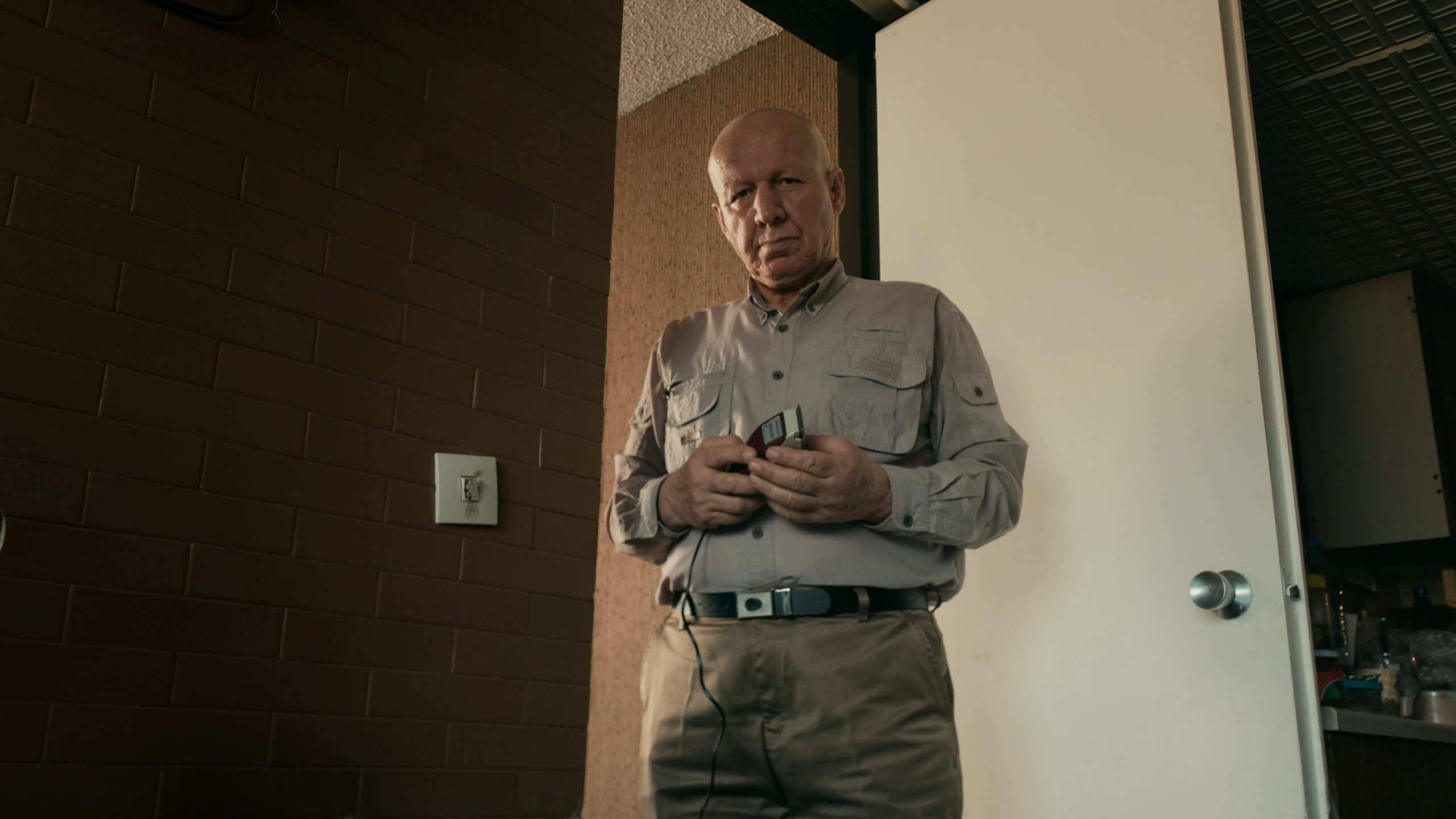
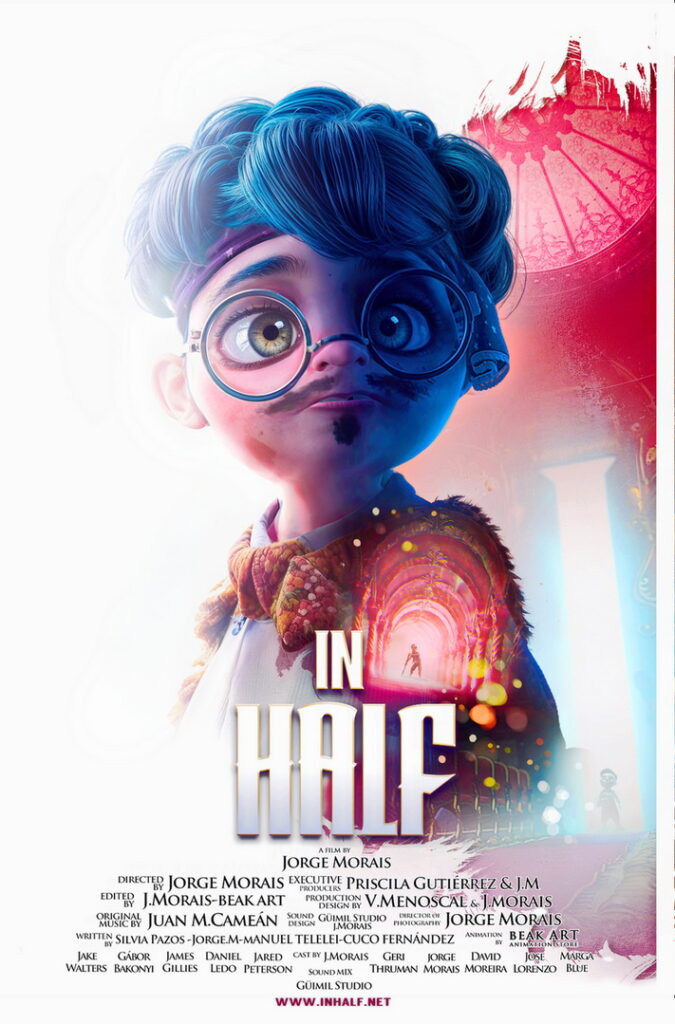
Through a child's imagination it tells the journey of a man who after falling prey to his fears, he must cross a strange world, a universe full of magic, where he will be confronted with his own fears and conflicts from the past and where he must find solutions for the future to discover his self-identity.
Director’s Statement
In Half was not born as a finished idea. It developed slowly, through years of exploration, doubt, experimentation and an almost constant need to understand what the story was really trying to say.
The first spark came from an unexpected place. Many years ago, a close friend introduced me to The Iron Shroud, a short Gothic horror story written by William Mudford in 1830. What fascinated me was not simply the horror, but the way fear operates inside the story. It does not arrive suddenly. It gradually closes in on the protagonist, almost without him noticing, until there is no space left to escape.
At first, I imagined making a direct adaptation. But the more I explored the story, the more I felt that there were other layers of fear that I wanted to investigate, more intimate, psychological and abstract. I became interested in the way fear can live inside us, connected to memory, vulnerability and the way we perceive ourselves.
The idea remained with me for a long time, almost silently, until Alice’s Adventures in Wonderland gave me another important clue. Its fragmented logic, its constant movement between reality and fantasy, and its ability to transform an internal state into a physical world made me realise that I could approach the story in a much more subjective and symbolic way.
That was the moment when In Half began to become its own film. I also started to understand that animation was the natural language for it. The emotions I wanted to explore were not necessarily linear or concrete. Fear, memory, exhaustion and vulnerability can distort time, space and perception. Animation gave me the freedom to make those invisible states visible—to turn emotions into environments, movement, rhythm and atmosphere.
Visually, I knew from the beginning that I did not want to repeat familiar formulas. I wanted the film to have its own identity, even if that meant taking risks. The visual style developed through a long process of drawing, testing, changing proportions, exploring references and discarding ideas. I was not looking for a particular “look”; I was trying to discover a visual language that belonged specifically to this story.
I wanted the characters to feel almost like actors. Their expressions, gestures, silhouettes and presence had to communicate even when they were completely silent. I was interested in what could be expressed simply through the way a character stands, looks or moves inside a frame.
Technically, In Half is a 3D animated film, but my passion for the visual language of stop-motion had a strong influence on the way I approached the images. I have always been fascinated by the way stop-motion films capture physical objects, their textures, imperfections, materials and, above all, the way light interacts with them. I wanted to bring that tactile quality into a digital environment.
Because of that, a significant part of the visual development of the film was devoted to the detailed study of materials, textures and lighting. Rather than creating perfectly clean digital surfaces, I worked extensively with variations in roughness, surface irregularities, micro-details and material response. Different surfaces needed to behave differently under light, so wood, fabric, skin, walls and other materials were treated as individual physical elements rather than simply as coloured textures.
Lighting became almost another character in the film. I approached many of the shots as if I were photographing a miniature set, carefully analysing the direction, intensity, softness and falloff of each light source. I paid particular attention to the balance between diffuse and specular response, contact shadows, ambient illumination and the subtle variations that give a surface a sense of physical presence.
Very small changes could completely transform a shot. A slightly different light angle, a softer shadow or a change in the roughness of a material could alter not only the appearance of the image, but also its emotional atmosphere.
I did not want to imitate stop motion literally. What interested me was its physicality, that feeling that the world on screen could almost be touched, that the characters and environments might have been built as miniature objects and photographed with a camera.
That tension between the precision and flexibility of 3D and the tactile imperfection of stop motion became an important part of the identity of In Half.
The process of making the film was inseparable from the story itself.
I created In Half independently over many years, developing the characters and world little by little. As happens with long creative projects, the initial excitement eventually gave way to exhaustion, uncertainty and doubt. There were moments when I honestly wondered whether I would ever finish it.
It was during those difficult periods that I began to connect more deeply with Vivencio, the protagonist. Although our circumstances were obviously different, I recognised something familiar in his emotional state: fear, exhaustion, vulnerability and the feeling of being divided while still trying to move forward.
At that point, the film stopped being only an artistic project. It became a personal process of introspection.
Transforming those emotions into images, rhythm, movement and atmosphere allowed me to look at them from a different distance. In a strange way, the film became a place where I could explore things that were difficult to articulate directly.
One of the scenes that best represents this idea takes place in a circular room. At the centre, there is a table covered with cakes, surrounded by three characters: two twins with opposing personalities and a waiter moving around them. Together, the characters and the circular architecture create the sensation of a clock.
But the choreography moves in the opposite direction.
For me, this movement represents an internal journey backwards through memories, mistakes and fears, not in order to remain in the past, but to reorganise it. Sometimes, in order to move forward with greater clarity, we have to return to the things we have avoided, slow them down and look at them from another perspective.
That scene is therefore more than a surreal visual sequence. It became a metaphor for the creative process itself.
There were many moments when I asked myself, “Why am I doing this?”
Animation is an incredibly demanding medium, and creating a project of this scale independently can sometimes feel almost unreasonable. But every time I considered letting the film go, another thought appeared: abandoning it would probably leave me with a greater regret than continuing.
So I kept going.
Not because I was always certain that the film would work, but because I remained faithful to the story.
Looking back, I think that is one of the most important things In Half taught me. A long creative project cannot survive on inspiration alone. Inspiration may start the journey, but eventually it is persistence, patience and the willingness to keep searching that carry it forward.
And perhaps that is what In Half ultimately became for me: an attempt to give a physical form to things that are difficult to see.
It began with a Gothic story written almost two centuries ago, passed through influences from literature, animation and visual art, and gradually became something much more intimate, a film about fear, vulnerability, fragmentation and the possibility of understanding what happens inside us.
I was not simply trying to make a film.
I was trying to understand it.
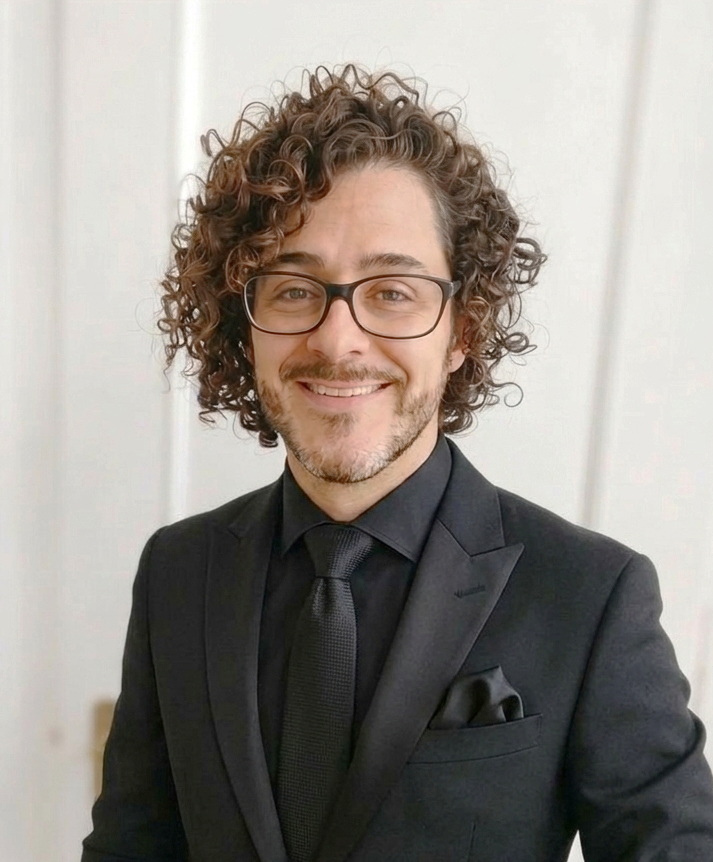
About the Director
Jorge Morais (Vigo, Spain) is a multidisciplinary filmmaker and visual artist whose work lies at the intersection of artistic tradition, contemporary technology, and cinematic storytelling.
With more than 20 years of experience in animation, illustration, and the visual arts, Jorge has contributed to seven animated feature films, as well as international series and advertising campaigns, collaborating with renowned studios and creative teams around the world.
His artistic journey is guided by a simple belief: the most powerful stories emerge where artistic tradition meets new technology. This philosophy has shaped a distinctive visual language that moves fluidly between animation, illustration, design, and cinematic expression.
His work has received significant international recognition, earning more than 350 awards at festivals worldwide. His filmography includes The Painter of Skies (2010), an award-winning animated short screened in more than 75 countries, and In Half (2024), his most recent short film, which has received more than 170 festival awards, was preselected for the Goya Awards, and was selected for presentation at SIGGRAPH Asia 2025.
In 2025, Jorge received the Golden Monkey King Award at the China International Cartoon & Game Expo (CICAF), becoming the first European artist to receive this distinction. The recognition reflects both the international reach of his work and his distinctive contribution to contemporary animation.
Today, Jorge is developing new directorial projects that continue to expand his artistic and cinematic language, including ambitious international collaborations and longer-form stories. His work explores the space between the intimate and the universal, combining personal expression, visual experimentation, and cinematic storytelling to create worlds that resonate beyond the screen.
Official trailer
Cast
Jake Walters — Vivencio
Jared Peterson — Old Man
Daniel Ledo — Mr. Crabby
Gábor Bakonyi — Price Tolfi
James Gillies — Mr. Noel Buhowski / Mr. Lian Buhowski
Jose Lorenzo Valido — Ms. Pingüo
Crew
Jorge Morais Valle — Director, Writer, Producer, Animation, Character Design, Editor, Visual Effects, Production Design & Cinematography
Silvia Pazos — Writer
Cuco Fernández — Writer
Juan Manuel Cameán — Original Music
Priscila Gutiérrez — Executive Producer